
Self-Kindness Is a Leadership Strategy — Here's the Framework That Proves It
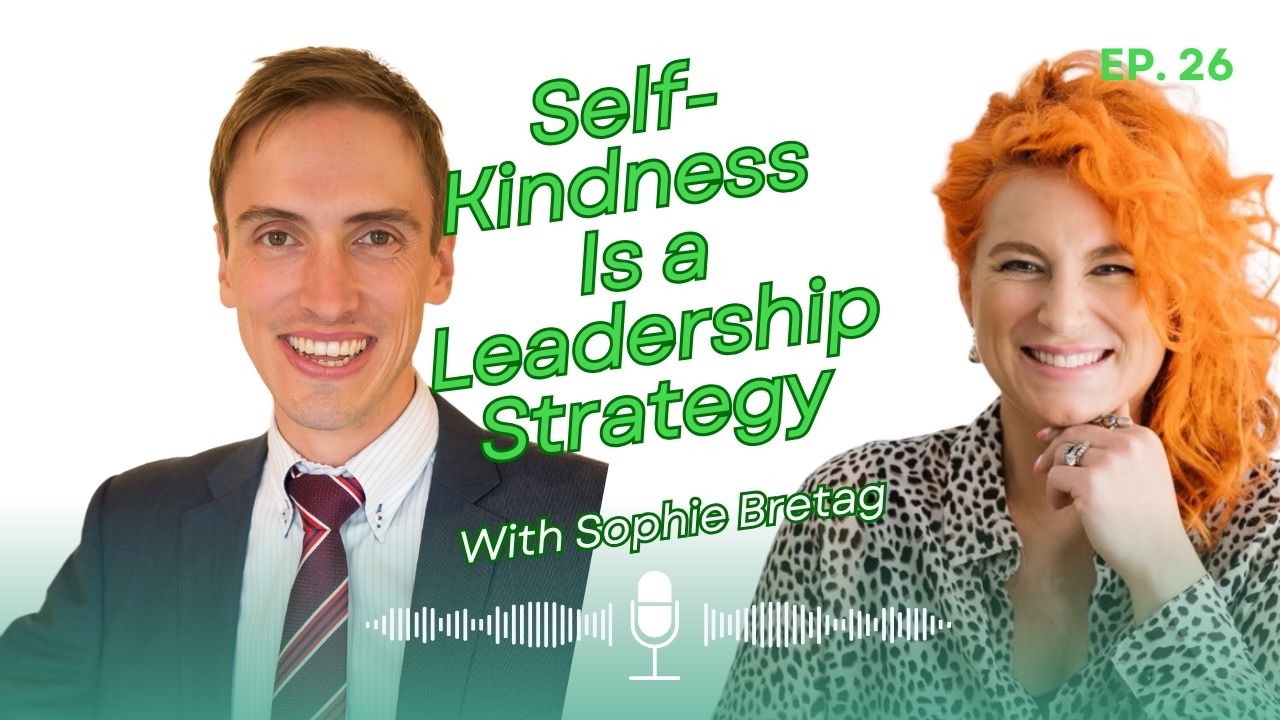
Most people treat self-kindness like a luxury. Something you do once the work is done, the team is sorted, and the numbers are in. Leaders especially.
Sophie Bretag spent nearly two decades in HR watching leaders burn themselves out trying to give everything to everyone except themselves. Then it happened to her — first a severe post-COVID burnout after seven and a half years in aged care, and then, in 2024, a head and neck cancer diagnosis that forced her to stop, reassess, and rebuild from the inside out.
I had Sophie on the Energize With Bram podcast this week, and I'll be honest — I wasn't expecting the conversation to go where it did. In the best possible way.
Sophie is now two years cancer-free. She's running her own wellbeing consulting practice. And she has just published The Kind Way — a book with a four-pillar framework she calls KIND, built specifically for leaders who want to lead better by taking better care of themselves first.
Here's what the framework looks like — and why it matters more than you think.
K — Know Yourself
This is where most leadership development falls apart. People say they're self-aware. They believe it, too. But there's a gap between how we think we show up and how others actually experience us.
Sophie puts it simply: if you're not walking your talk — if your behaviour doesn't match your values — your team can't thrive. They don't know which version of you to expect. And that uncertainty costs trust.
In our conversation, I connected this directly to DISC profiling, which I use extensively in my own work. DISC is one of the most practical tools I know for revealing the behavioural blind spots that even intelligent, well-intentioned people carry. Sophie is a high DI — dominant and influential — and she was refreshingly honest about how her directness could land as abrasive before she learned to read the room. That kind of self-knowledge is what changes a leader's impact.
I — Include With Intention
Inclusion isn't just a diversity checkbox. It's a leadership discipline. Sophie's point here is that knowing yourself creates the space to genuinely see and include other people — not just their cultural backgrounds or working styles, but their full humanity.
She made a simple observation that stuck with me: in every team meeting, there are always the same two or three voices dominating. Great leaders notice the silence and actively create room for it. Belonging and mattering aren't soft outcomes — they're what drive real buy-in.
N — Nurture Your Capacity
You cannot pour from an empty cup. That's the cliché. But what Sophie adds is precision: nurturing your capacity isn't just rest or sleep or exercise. It's knowing which practices specifically work for you — and treating them as non-negotiable, not nice-to-haves.
After burnout and cancer, Sophie now makes self-kindness a daily practice, not an afterthought. The research backs this up too: when leaders are running on fumes, their teams feel it first.
D — Demonstrate Conscious Leadership
This is where the first three pillars converge into behaviour that other people actually experience. Conscious leadership means showing up with curiosity instead of assumption, with humility instead of ego, with respect that doesn't require friendship.
Sophie and I talked about what gets in the way of this — and ego topped the list. Followed closely by the fear of being wrong. Great leaders, she observed, are the ones who can say 'I don't know — what do you think?' without it threatening their authority. That kind of agility is what keeps teams moving through change.
The DISC Dimension That Changes Everything
One of the most fascinating moments in our conversation came when Sophie asked whether different DISC styles carry different mental health risk factors. The answer, backed by a 2021 paper by Peter Agnew published through the Australian College of Applied Psychology, is yes.
High C's — analytical, detail-driven, risk-averse — are statistically more predisposed to anxiety and depression under sustained pressure. High I's are more susceptible to what the DSM calls histrionic tendencies: the constant need for validation and spotlight. High S's, the quiet peacekeepers, can silently fill the bucket until it overflows — classic burnout territory. And high D's, unchecked, can slide toward antisocial behaviour rooted in a lack of empathy.
The point isn't to pathologise anyone. The point is that self-awareness is protective. When you know your default, you can catch yourself before you tip over the edge.
What Sophie Told Every Aspiring Leader at the End
I asked Sophie for the one piece of advice she'd give someone stepping into leadership. Her answer: find a mentor. Find someone who has walked the road before you, who will believe in you before you believe in yourself.
It's the simplest thing. And the most underrated.
If this conversation resonated with you — if you want to understand your own DISC style, sharpen your self-awareness, and communicate in a way that actually gets results — I'd love to invite you to explore Communication Mastery. It's the course I've built over years of working with leaders across 25 countries, and it starts with exactly this kind of inside-out shift.
Find out more at: www.bramlagrou.com/communication-mastery-class-only
